UK Casino Sites That Accept Debit Cards
 Available in GB
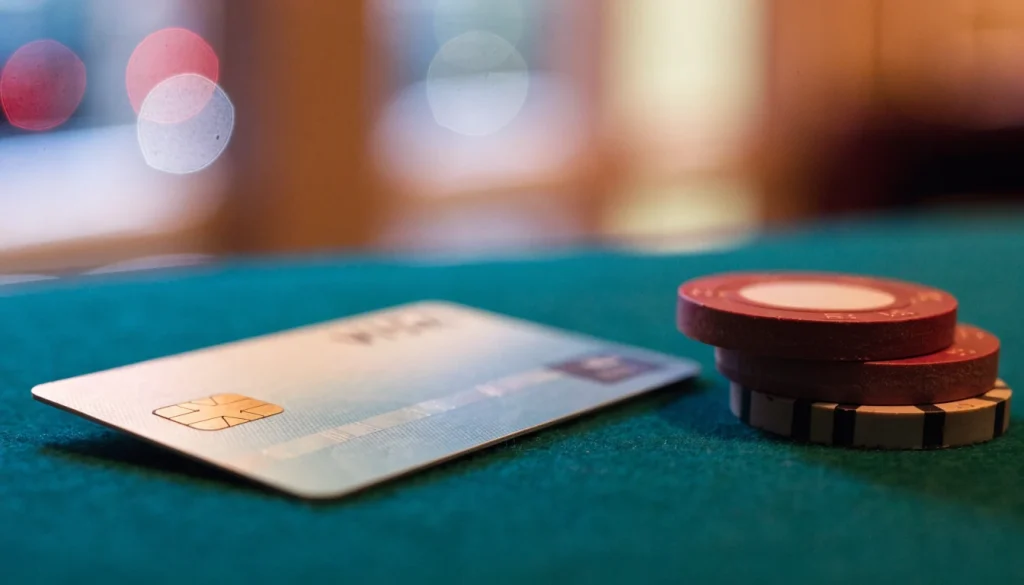
A practical guide to checking card acceptance, preparing for a deposit and understanding how withdrawals differ from payments in.
Can you use a debit card at a UK online casino?
Yes. Debit cards are commonly accepted at UK online casinos, including cards issued on the Visa and Mastercard networks. If you have a debit card in your own name, it can be a straightforward way to put money into a gambling account, provided the cashier offers that card option.
The important distinction is between debit and credit cards. UK-licensed casinos cannot accept credit-card payments for gambling. The regulator introduced this ban on 14 April 2020, and it has not been relaxed. That restriction also covers credit-card funding routed through certain money-service arrangements, so using another payment layer does not make a prohibited deposit acceptable.
In practice, the cashier may show separate buttons for Visa and Mastercard, or one general debit-card option. You select it, enter the card details requested, and approve the transaction through your bank’s security process. The card and casino account should belong to you; using somebody else’s card can create ownership problems later.
I have made the mistake of treating every card logo as a guarantee that a payment will go through. It is not. A casino may accept debit cards in principle while the cashier displays only particular card products or payment routes at that moment. The useful starting point is therefore simple: look for the debit-card option in the cashier before assuming your card is eligible.
For UK players, the answer to whether you can deposit with a debit card is generally yes, but only where the remote gambling licensee currently supports your card type. Debit is allowed. Credit is not.
UK Casino Sites That Accept EcoPayz: What to Check · Casinos That Accept iDEAL in the UK: What to Check
Recommended online casinos
- AmunbetBonus: Join now and get 450% up to 2,700 GBP + 450 FS · Payout speed: 1-3 business days
- x3betBonus: Welcome Pack 100% Up to £1.000 + 200 Free Spins · Payout speed: 1-3 business days
- EvoSpinBonus: 125% up to €2500 + 125 Free Spins · Payout speed: 1-3 business days
- SpinFormulaBonus: 550% Up To £15,000 + 550 FS · Payout speed: 1-3 business days
- DieselwinBonus: Welcome Pack 250% up to £4000 + 200 FS · Payout speed: 1-3 business days
- SlotoSportBonus: 500% up to £ 10 200+ 777 FS · Payout speed: 1-3 business days
- ZombillionBonus: Welcome Pack 250% up to £4000 + 200 FS · Payout speed: 1-3 business days
- Revery PlayBonus: 100% up to€1,000+ 100 FS · Payout speed: 1-3 business days
Checking whether your card will work in the cashier
A casino’s payment page is the place to check whether a debit card is genuinely available to you. A review, banner or payment-method guide can show Visa and Mastercard, but that does not confirm that the option is active for every UK customer or compatible with every card product. One specialist review makes that distinction clearly: the cashier, rather than a general payment list, is where current availability has to be tested.
That matters when you are comparing debit card casino sites in the UK. “Accepts Visa” sounds definite. In practice, it tells you the card network named by the operator, not necessarily the result you will get after signing in. The cashier may show a card option only for particular customers, currencies or account settings. It may also distinguish between depositing and withdrawing, so do not treat a logo as a complete payment promise.
Start with the signed-in cashier
Open the cashier after creating and signing into your account. You need the payment screen attached to your account, not a generic page visible before registration. Look for the deposit methods and select the card option if it is shown. Visa and Mastercard are the relevant network names to look for, but read the wording around them rather than relying on the logo alone.
I made this mistake myself: I saw a familiar card symbol on a landing page, assumed the transaction was sorted, and only discovered the real restriction after entering the cashier. The extra minute would have saved the failed attempt.
Check these points before entering card details:
- Is the card option displayed after selecting the UK account?
- Is Visa or Mastercard named explicitly?
- Does the method appear available for your account rather than only in general site material?
- Is the card route presented for the transaction you want to make?
- Does the cashier ask for a card issued in your own name?
- Is there any message about unsupported card types or payment restrictions?
The aim is not to collect casino names. It is to confirm that the particular cashier offers a usable route for your account.
Network acceptance is not the same as card acceptance
Visa and Mastercard are payment networks. Your actual card is also a product issued by a bank or another provider, and the issuer may apply its own rules to gambling transactions. A cashier can therefore display Visa or Mastercard while your particular card is declined or not eligible.
That is why phrases such as “the best online casino sites that accept debit cards” are not very useful on their own. A site may accept one Visa debit product and reject another. The same problem can occur with Mastercard. The network logo narrows the possibilities; it does not remove the need to test the card route in the cashier.
Use the card’s own description when checking compatibility. Confirm that it is a debit card, note the network shown on it, and make sure the name and account details you use at the casino match the payment account. Do not assume that a card which works for shopping will automatically be available for gambling transactions.
A decline does not necessarily mean the casino rejects all debit cards. It could relate to your specific card product, the issuer, or the cashier’s current configuration.
A decline also does not prove that the casino rejects all debit cards. It may relate to the issuer, the card product, the cashier’s current configuration or the account itself. Treat the message as a prompt to check the details, not as a reason to keep submitting the same payment repeatedly.
What to look for in the payment window
The useful information is normally close to the card form. Read the labels and notices before typing anything. Look for the supported network, the account currency, any stated card restrictions and the identity details requested. If the page offers a card route but gives no indication that your product is eligible, the safest interpretation is that eligibility still needs confirming.
A practical check looks like this:
- Sign in to the casino account.
- Open Cashier, Deposit or the equivalent payment area.
- Select the card method.
- Compare the network shown with the logo on your debit card.
- Read any eligibility, issuer or account-holder wording.
- Stop if the cashier says the card type is unsupported.
- If everything matches, continue only after reviewing the transaction screen.
That process is deliberately dull. Dull is good when money is involved.
Do not use a payment form that you reached through an unverified pop-up or an unexpected message. Enter the site through your normal account access, check that you are on the correct cashier page and avoid sending card information by email or chat. The cashier should be the place where the card details are entered.
UK availability can change
Payment menus are not permanent. A method shown in an old review may no longer be active, while a method that was unavailable before may appear after an operator changes its payment arrangements. The current UK cashier is therefore more useful than a static list of “top debit card casino sites”.
This is especially important if you are comparing several online casino sites that accept debit cards. Do not rank them solely by the presence of a Visa or Mastercard logo. First check whether the site serves your UK account, whether the cashier displays the card method once you are signed in and whether your card product is accepted. Those are separate checks.
A review can help you identify what to inspect, but it cannot replace the account-level test. Even a carefully written payment guide may describe a method at a different point in time or for a different customer journey. The wording may remain online after the cashier has changed.
Watch for identity and ownership prompts
A payment route may be visible but still require the cardholder and casino account to correspond. If the cashier asks for the cardholder’s name, enter it exactly as it appears on the card or as the issuer records it. Do not borrow another person’s card to get around a declined payment, and do not try several unrelated cards simply to force a transaction through.
DO
- Use a card that belongs to your own name
- Ensure account and payment details match
- Enter details through the official secure cashier
DON’T
- Use someone else’s card or bank account
- Attempt to bypass ownership checks
- Use unverified pop-ups for payment forms
Keeping the account and payment instrument tied to the same customer reduces avoidable ownership questions. It also gives the operator a clearer record if the transaction needs checking. A mismatch can turn a simple card payment into a request for additional information.
This is not the moment to improvise with someone else’s bank account, a card registered to another person or details that do not match your profile. The cashier may reject the payment, and resolving the issue can be more awkward than choosing a compatible card from the start.
A failed attempt: what it may mean
If the cashier rejects the card, read the exact message. “Card not supported”, “transaction declined” and “details incorrect” do not necessarily describe the same problem. Check the card number, expiry date and security information only through the casino’s secure cashier, then confirm that the card is still valid and that the issuer has not blocked the transaction.
Avoid repeatedly submitting the same failed payment. Multiple attempts can create confusion in your bank statement, and a pending authorisation may appear even when the casino balance has not changed. If the message points to card eligibility rather than a typing error, contact the casino through its official support channel or ask the card issuer whether the transaction category is permitted.
Contact Support
If a payment fails, you can contact the casino through its official support channel or ask your card issuer whether the transaction category is permitted. Support can clarify if the issue is connected to the card product, account status, or cashier configuration.
Support can confirm whether Visa or Mastercard deposits are currently enabled for your account. It may also explain whether the problem is connected to the card product, account status or cashier configuration. Ask for a clear answer about the method shown in your own cashier, rather than accepting a generic statement that the casino “takes cards”.
If the cashier does not display a card route at all, do not enter card details into another form advertised elsewhere on the site. The absence of the option is itself useful information: the method is not currently available through the account screen you are using.
Do not confuse a logo with a complete route
For a card method to be useful, you need to understand what the cashier actually permits. A logo may indicate a brand accepted somewhere in the operator’s payment system, while the account-level cashier determines whether you can use it now. Treat those as two different layers:
- Network level: Visa or Mastercard is named.
- Account level: the method appears in your signed-in UK cashier.
- Product level: your particular debit card is eligible.
- Transaction level: the payment form accepts the details and processes the request.
Only the final layers tell you whether the card will work in practice. This is why a long list of casinos is less helpful than a short compatibility check. The result can differ between two accounts using the same card network.
When I check a card route now, I ignore the sales language first and go straight to the cashier. If the method is present, the network matches and the card is mine, I have a basis for continuing. If one of those points fails, I do not call the site a debit-card option just because a payment logo appears on a page.
The same approach applies whether you are looking for a casino that accepts debit cards, a UK casino account with Mastercard support or a Visa deposit route. Start with the live cashier, then check the card product and account details. That is the practical test.
What to check before making a debit-card deposit
Once Visa or Mastercard appears in the cashier, the next question is not simply whether the card works. The terms attached to the payment matter too. I have made the mistake of checking only the card logo, entering the amount, and noticing the extra detail after the transaction was already underway. A quick look at the deposit screen is less exciting, but it prevents small surprises.
Check the minimum deposit
The minimum is set by the casino and can also depend on the payment method. A specialist review puts the common starting point at £10–£20, but treats that as a range rather than a fixed rule. The cashier is the useful place to confirm the figure for your card.
That matters when you are making a cautious first payment. If the card route requires more than you intended to deposit, changing the amount can affect your budget and possibly your chosen payment method. Do not assume that the amount shown for another route also applies to a debit card deposit.
A sensible check is:
- select Visa or Mastercard in the cashier;
- enter the amount you actually plan to deposit;
- read the displayed minimum before confirming;
- look for any separate payment notice beside the amount.
The final screen is more relevant than a general payment-method description. Terms change.
Look for deposit caps
A maximum can apply to one transaction, a day, or a month. The limit may vary with the payment method and with the status of your account, so a card deposit that is available in principle may still be restricted at the amount you want to send.
I look for three separate details rather than treating “maximum deposit” as one number:
- the largest single card transaction;
- the total allowed during the relevant period;
- whether account checks or account status affect the limit.
Those limits are not merely technical. They can stop a payment, split it into several transactions, or leave you thinking the card has been declined when the real issue is the cashier’s control. If the screen does not make the applicable cap clear, support should confirm it before you authorise the payment. No guesswork with money.
Confirm the account currency
The account currency deserves attention before the first transaction. The pages reviewed for this market state that GBP is supported, while a specialist review advises confirming the currency shown on the account before paying.
For a UK debit card, I would check that the balance will be recorded in pounds if that is what I expect. A mismatch can introduce conversion even when the deposit itself appears to have gone through normally. It can also make the amount displayed in the casino differ from the amount leaving the bank account.
Check:
- the currency shown beside the casino balance;
- the currency used on the deposit screen;
- whether the card issuer will process a foreign-currency transaction;
- the exchange rate or conversion information displayed before approval.
Do not rely on the pound symbol alone if the cashier gives a separate currency notice. The account setting and the card transaction should make sense together.
Work out the real cost
“Fee-free” can describe one part of the payment, not the whole payment. Costs may come from the casino, the payment provider, the card issuer or bank, the exchange rate, and the card network. A specialist review also points out that there is no single cheapest method for every amount.
For a debit-card deposit, compare the amount you enter with the amount that will actually leave your account. Check whether the casino adds a charge, then consider whether your bank treats the transaction as a foreign-currency payment or applies its own fee. A provider can also build its cost into the exchange rate rather than displaying a separate line.
That conversion spread can be more expensive than an obvious flat fee. I have learned to look at the rate, not just search the page for the word “fee”. The quiet cost counts too.
Practical Calculation
Identify the casino charge, provider charge, bank/issuer cost, exchange rate, and network cost before confirming.
The practical calculation is simple: identify the casino charge, the provider charge, any bank or issuer cost, the exchange rate used, and any network cost. Compare those elements for the actual deposit amount, not for a different payment size or a different currency.
Finally, save the confirmation and check the bank transaction against the casino balance. If the two amounts do not match because of currency conversion or a stated charge, the record helps explain what happened. If the payment fails, avoid repeatedly resubmitting it before checking the cashier message and your bank’s transaction details. Repeated attempts can make a straightforward limit or currency issue harder to untangle.
Deposits are quick; withdrawals are a different story
A debit-card deposit can appear in your casino balance almost immediately. That is the part people remember when a cashier advertises “instant” payments. The less exciting part starts when you request a withdrawal. The casino may need to approve it, check your account, and decide how the money should be returned before your bank gets involved.
A specialist review describes the difference plainly: card funding can be instant, while a payout may take several business days. That is not a contradiction. A deposit is an authorisation to move money into the gambling account; a withdrawal is a controlled release of money back to you.
I have made the mistake of treating those two journeys as mirror images. They are not. Seeing the deposit arrive quickly tells you very little about the time needed to receive winnings.
Withdrawal Speed
Attention Fast deposit arrival does not guarantee fast withdrawals. The casino’s internal approval and verification processes can take several business days.
What happens after you click withdraw?
The request normally enters the casino’s internal process first. The remote gambling licensee may review the transaction, check that the account information is complete, and confirm that the withdrawal complies with its payment and anti-fraud controls. Only after approval does the payment move through the card or banking network.
A specialist review also notes that the operator’s approval process and the state of the player’s verification affect withdrawal speed. That matters particularly when you are making a first withdrawal. If KYC has not been completed, the operator may ask for documents or clarification before releasing funds. Until those checks are finished, the payment is not simply waiting for your bank.
So the timeline can contain several separate stages:
- You submit the withdrawal request.
- The casino reviews the account and transaction.
- Any outstanding KYC checks are completed.
- The operator sends the approved payment through the selected route.
- The card issuer or bank processes the incoming funds.
A delay at any stage can make a “fast withdrawal” label feel misleading. The card itself may not be the slowest part.
Why the first withdrawal can feel slower
New accounts attract more checking because the casino has less established information about the customer and the payment trail. The operator may need to confirm identity, age, address, ownership of the payment method, or another account detail before approving the request. The first payout can therefore take longer than later withdrawals while verification is completed.
That does not mean every first withdrawal will be delayed. It means you should not plan around an unverified account paying out at the same speed as a completed deposit. If you are choosing a debit card casino, look beyond the deposit badge and read the withdrawal and KYC wording in the cashier or account terms.
One practical step is to complete requested verification before you need the money. Keep the details on your gambling account accurate, and make sure the payment route is connected to you. Basic mismatches create avoidable questions.
Casinos That Accept Bitcoin in the UK: What to Check
Why the original card matters
UK anti-money laundering controls commonly require gambling payouts to go back to the original payment source. Returning funds to the source used for the deposit is also a standard anti-fraud control. In practice, this means a casino that accepted your Visa or Mastercard deposit may first try to send the withdrawal back to that same card, subject to its current cashier rules and the card issuer’s ability to receive the payment.
I used to see this as unnecessary bureaucracy. It is easier to understand when you look at the alternative: allowing money to move freely between unrelated cards, accounts and people would make ownership much harder to establish. The original-source approach gives the operator a clearer payment trail.
It can also explain why a requested alternative is not processed immediately. If you ask for funds to go somewhere different, the casino may require additional verification. The alternative route might involve another ownership check, supporting documents, or a separate internal approval.
That is why a consistent route is usually less troublesome:
- deposit from a card that belongs to you;
- keep the account details under the same customer’s name;
- request the withdrawal through the route the cashier permits;
- respond promptly if the operator asks for KYC information.
No magic trick. Just fewer loose ends.
A debit-card payout is not the same as a card refund
Payment language can be confusing. A deposit may be reversed or refunded in some circumstances, but a withdrawal of winnings is handled through the casino’s approved payout process. Do not assume that every card transaction appears in your account in the same way or on the same timetable.
The cashier should tell you whether the card is available for withdrawals, not merely whether it accepted the deposit. This distinction is important because a payment method can be convenient for funding while the return route is subject to closed-loop rules, card-network limitations, or the operator’s own process.
If the cashier offers a different route for the balance, read the conditions before selecting it. Returning money to the original source remains a common control, and alternatives may bring extra verification rather than removing it.
What “fast” should mean in practice
When you see claims about fast online debit-card casinos, separate the operator’s approval time from the delivery time. A casino can approve a withdrawal promptly, yet the bank or card issuer may still need to process it. Conversely, a card network cannot make an unapproved casino withdrawal appear in your account.
The useful questions are more specific:
- Has your account completed KYC?
- Does the cashier permit withdrawals to the same debit card?
- Has the casino approved the request?
- Is the payment still in the operator’s processing queue?
- Has the card issuer received and posted it?
If you contact support, ask which stage the withdrawal has reached. “It has been processed” can mean the casino has approved it, not necessarily that your bank has credited it. I learned to ask for that distinction after waiting for a payment that had not yet left the operator.
A specialist review identifies casino approval and account verification as key influences on speed. Treat that as the sensible baseline rather than assuming that a Visa debit card or Mastercard debit card automatically means immediate withdrawals.
Before requesting the payout
Check the withdrawal screen carefully. Confirm the selected card or route, the account details, and any status message about verification. If the casino asks you to confirm ownership of the card, deal with that before submitting another request. Repeatedly changing methods can make the payment trail harder to follow.
Use the same personal details throughout the account and payment process. A name mismatch, a card belonging to somebody else, or an attempt to send funds to an unrelated account can create friction that has nothing to do with the card’s speed.
Payout Checklist
- Complete all requested KYC verification
- Confirm the cashier permits withdrawals to your card
- Ensure account name matches your payment details
- Keep your withdrawal confirmation records
Also keep the transaction record. Save the withdrawal confirmation and any support correspondence until the money reaches your account. That gives you a clear reference if the operator, payment provider or bank asks when the request was made.
The sensible expectation is simple: card deposits may be instant, but getting money back is a separate process. Allow for internal approval, KYC, anti-money laundering controls and the receiving bank’s processing. Fast funding is useful; it is not a promise of equally fast cash-out.
Debit cards alongside other payment routes
A debit card is the familiar middle ground: you pay directly from your bank account, the casino cashier recognises the card network, and the deposit route is easy to understand. That makes it a sensible starting point, but not automatically the best choice for every transaction. I have found it more useful to compare the route with the job I need it to do than to chase a label such as “best debit card casino”. “Best” often means little more than a payment logo beside a deposit button.
Bank transfers and open banking sit closer to your current account. A specialist review of payment methods reports that these routes can provide instant deposits and quick withdrawals at many sites, although the actual result still depends on the operator and the service shown in its cashier. They can suit a larger transfer or someone who would rather not enter card details, while a debit card may feel simpler for a one-off deposit.
There is a practical difference between a card and a bank route. A card payment normally starts from the casino’s cashier, whereas a bank transfer may involve selecting your bank and approving the payment through it. That extra step is not necessarily a drawback, but it gives you another screen to check before confirming the amount and destination.
Alternative Routes
Bank Transfers
Routes like open banking that move money directly through your bank account.
E-Wallets
Services like PayPal, Skrill, or Neteller that keep casino payments separate from your main bank.
Prepaid Vouchers
Options like Paysafecard designed specifically for deposits only.
PayPal is another route worth separating from the general “e-wallet” label. A specialist review describes it as popular for speed and convenience, but also notes that an operator may leave PayPal deposits outside a promotion’s eligibility rules. That is the sort of detail I now check before paying rather than after seeing a bonus fail to appear. A fast payment is not automatically a qualifying payment.
Skrill and Neteller work in a similar broad category, though availability is site-specific. A specialist review reports that both can be found at some casinos and that promotions often exclude them. Skrill is also described in a current specialist review as a particularly common deposit option at UK-friendly casino sites in 2026. That does not mean every cashier will show it, or that a Skrill deposit will receive the same promotional treatment as a card deposit. The cashier and the promotion terms still decide.
E-wallets can be useful when you prefer to keep a casino payment separate from your main bank-card details. They also add another account to manage, another set of verification details and another possible fee structure. I would not choose one purely because it appears in a glossy payment-method list. It needs to support the transaction you actually want, including withdrawals where those are offered, and the casino must permit that route for your account.
Casino Sites That Accept Jeton in the UK
Prepaid vouchers are a different proposition again. Paysafecard is designed for deposits only, so it should not be treated as a complete replacement for a debit card or an account-based wallet. It may appeal if you want to control the amount loaded into the gambling account, but the deposit-only limitation matters: you need another approved route if you later need to receive a payout.
Apple Pay may also appear at some UKGC-licensed casinos for deposits. Its presence does not make it universal, and it should not be confused with a promise that every casino supporting Visa or Mastercard will accept a card through Apple Pay. The wallet, device, bank and casino all form part of that payment chain.
I treat those logos as a prompt to open the cashier, not as a recommendation. Availability can change by jurisdiction, account, currency and transaction type.
Speed can differ between deposit and withdrawal. A specialist review places PayPal, open banking services and debit cards connected to fast payout systems among the quicker withdrawal routes. That is a comparison of route types, not a guarantee. The casino still needs to approve the withdrawal, and the selected method must be enabled for payouts rather than deposits alone.
Promotions are another reason not to rank payment methods by convenience alone. A card deposit may qualify where an e-wallet or voucher does not; Skrill, Neteller and PayPal may be treated differently by the particular offer. Read the payment exclusions beside the bonus conditions, not just the headline. “Eligible” can hide a payment-method restriction.
Final Summary
- Always test the card route in the actual signed-in cashier.
- Ensure the account currency and minimum deposit limits match your expectations.
- Keep your identity and payment ownership consistent to avoid friction.
- Distinguish between deposit speed and withdrawal processing times.
| Route | What it is useful for | Limitation to check |
|---|---|---|
| Debit card | A direct, familiar deposit from your bank account | Whether the cashier accepts your card product and whether the route supports payouts |
| Bank transfer or open banking | Moving money through your bank rather than entering card details | The service shown, approval flow and delivery conditions |
| PayPal | A wallet-style payment with a reputation for speed and convenience | Bonus eligibility and whether withdrawals are supported |
| Skrill or Neteller | Keeping casino payments within an e-wallet | Site availability and promotion exclusions |
| Paysafecard | A prepaid deposit route | It is deposit-only |
| Apple Pay | Paying through a supported mobile wallet | Whether the casino, bank and device combination is accepted |
| Cryptocurrency | An additional payment category listed by some casino pages | Current availability and whether it is appropriate for the transaction |
So when comparing online casinos that accept debit cards, I would not stop at the Visa or Mastercard symbol. I would compare the available route with your purpose: direct card funding, a bank-linked payment, a wallet, or a deposit-only voucher. Then I would check the cashier and the specific promotion before confirming anything. Less guesswork.
Keep the payment trail simple and secure
When I use a debit card at a UK casino, I keep one rule in view: the gambling account and the payment method should belong to the same person. It sounds obvious, but mismatched names are exactly the sort of basic detail that can turn a routine transaction into a request for extra evidence.
Use your own casino account, registered with your real details, and pay with a card or other route held in your name. That gives the operator a straightforward ownership trail. It also helps with fraud checks, because the payment is less likely to look like an attempt to move money between unrelated people.
I have made the process harder for myself before by switching between accounts and payment routes. The money was not necessarily at risk, but the explanation became longer than it needed to be. One named account, used consistently for both deposits and withdrawals, is generally the cleanest arrangement.
That does not mean every payout will follow the exact route you expect. Returning funds to the original payment source is a common anti-fraud and anti-money-laundering control. If you ask for an alternative route, the casino may need further verification before releasing the money.
Casinos That Accept Wirecard in the UK: What to Check
So, when deciding which casino to join with a debit card, look beyond whether the card logo appears in the cashier. Check that the account name, cardholder name and withdrawal details can form one coherent trail. Keep your registration information accurate, avoid using somebody else’s card, and do not open extra accounts simply to try another payment path.
It is less exciting than chasing a “smooth” payment experience. It is also much less likely to create avoidable friction later.
Keep it consistent.
A few card-payment details worth checking in 2026
Payment logos are a starting point, not a guarantee. A specialist review may show Visa and Mastercard among the listed options, but the cashier is the useful test: it shows whether the method is available to UK customers at that moment and whether your particular card product is accepted. I have learned not to treat a logo as a promise. Small distinction, big difference.
Casinos That Accept Instadebit in the UK: What to Check
Before confirming a deposit, open the account or cashier settings and check the currency attached to your balance. GBP is supported on the reviewed pages, but the account currency still needs confirming before the first transaction. Paying through a different currency can introduce conversion costs, even when the payment screen does not make the effect obvious.
That is where a supposedly “top” debit-card casino can become less attractive in practice. The visible charge is only one part of the calculation. The casino, payment provider, card issuer or bank may add costs, while the exchange-rate spread can quietly reduce the amount credited. A flat fee is easy to notice; an unfavourable rate is not.
My final check is simple: select the card in the cashier, confirm UK availability, read the currency shown, and review the amount that will actually reach the gambling balance. Then stop if the figures do not match what you expected. No clever workaround.
What is the fastest withdrawal method for UK casinos?
PayPal, open banking services and debit cards linked to fast payout systems are generally among the quickest options. Your casino’s approval process and account verification also affect how soon the money arrives.
What is the current minimum deposit?
The minimum deposit is usually £10–£20, depending on the payment method.
Which payment methods are accepted in Great Britain?
UK casinos commonly accept Visa and Mastercard debit cards; other options include bank transfer, PayPal, open banking, Paysafecard and, at some sites, Skrill or Neteller. Check your signed-in cashier, since availability varies by casino and account.
Which method has the lowest fees?
There is no universally cheapest method. Compare casino and provider charges, currency conversion costs and any bank or network fees for your payment amount.
Is Skrill available?
Yes, Skrill is available at some UK-friendly casino sites and remains a common deposit option. It may be excluded from promotions.
Do UK casino withdrawals require verification?
Verification may be completed before a first withdrawal, and it can delay processing. Make sure your account details and payment method belong to you; withdrawals commonly return to the original payment source.